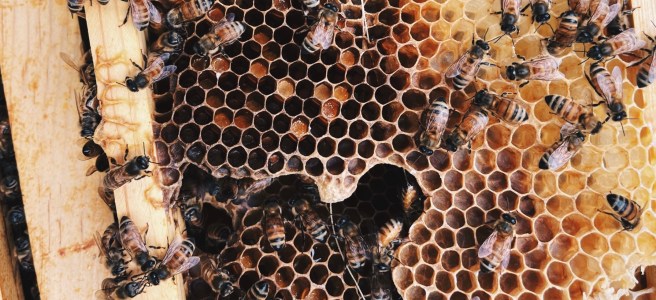
A couple weeks ago, we welcomed some new friends to the garden, and they fit right in… industry, planning, teamwork, and energy abound!
Why in the world would they take on one more thing, you ask? I promise, we did not! A while back, our bee-loving friend, Kellie, pitched the idea of relocating her hives to our garden. Her home is in a denser area with less pollen and more hives nearby to compete for it. And, as we’ve now learned, if there’s not enough pollen and nectar, there’s not enough honey to get through the winter and support a thriving, growing hive.
So, we said yes to the bees, and to Kellie, who is graciously caring for them. It’ll be great for the garden, the bees, and us – just wait for that honey on a cheese board coming soon!
In preparation, Kellie dropped off this fun little book for us to read, and all four of us have become obsessed with bee facts!
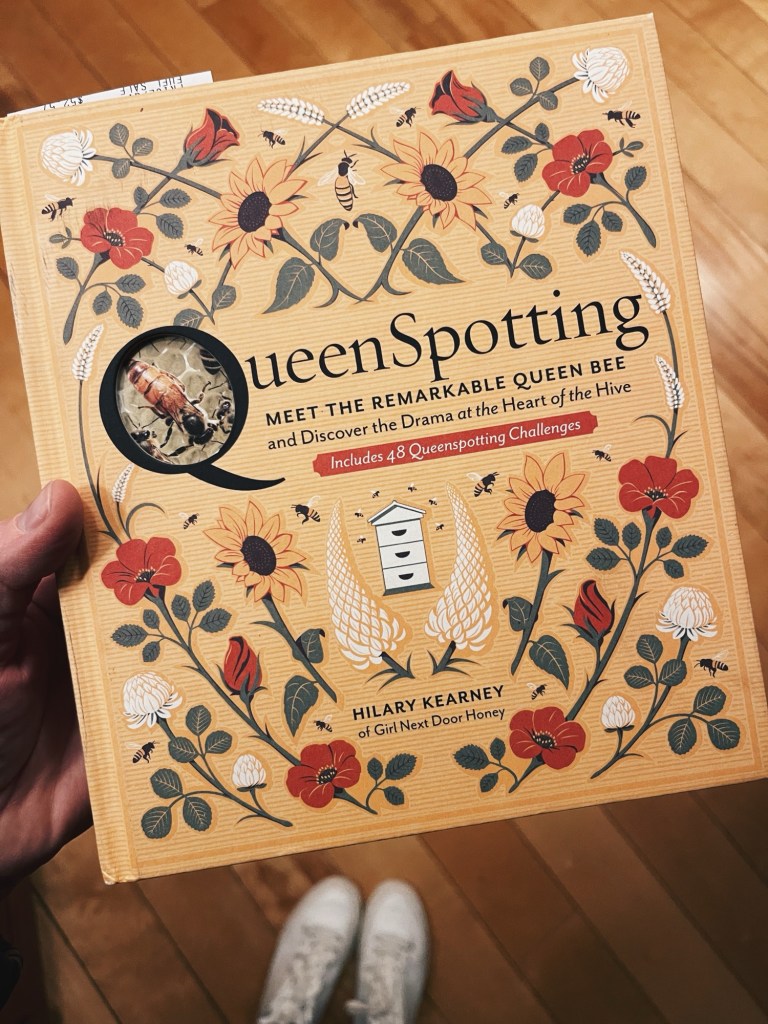
Did you know that nurse bees can determine the type of bee a larve will grow into by changing its food? They intentionally do that knowing which types of bees the hive needs at any given time! Bees are believed to be able to recognize human faces. They do complicated dances to tell each other where the best pollen is, based on the angle of the sun. They even have an undertaker bee, who is responsible for removing sick or dead bees to keep the hive healthy!

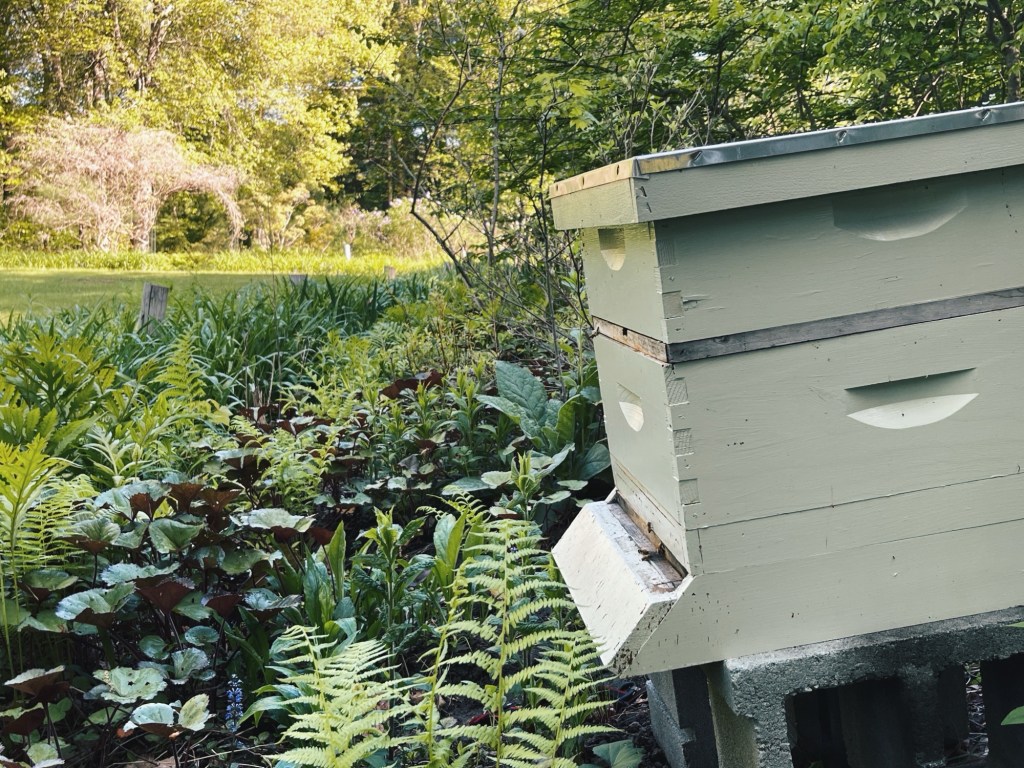
This spring, we found the ideal spot in the garden – tucked away from primary entertaining areas, with good sun exposure, trees to break the wind, and a gentle incline so the hives can tip forward to naturally drain any water that might get in there. We cleared space for two hives, our own mini apiary, and Kellie drove out to Western MA to pick up the bees. Having native New England bees with queens adapted to overwintering is, apparently, helpful!
The two colonies arrived in boxes with their queens in little cases, plugged with a sugar candy the worker bees will eat through to release her.
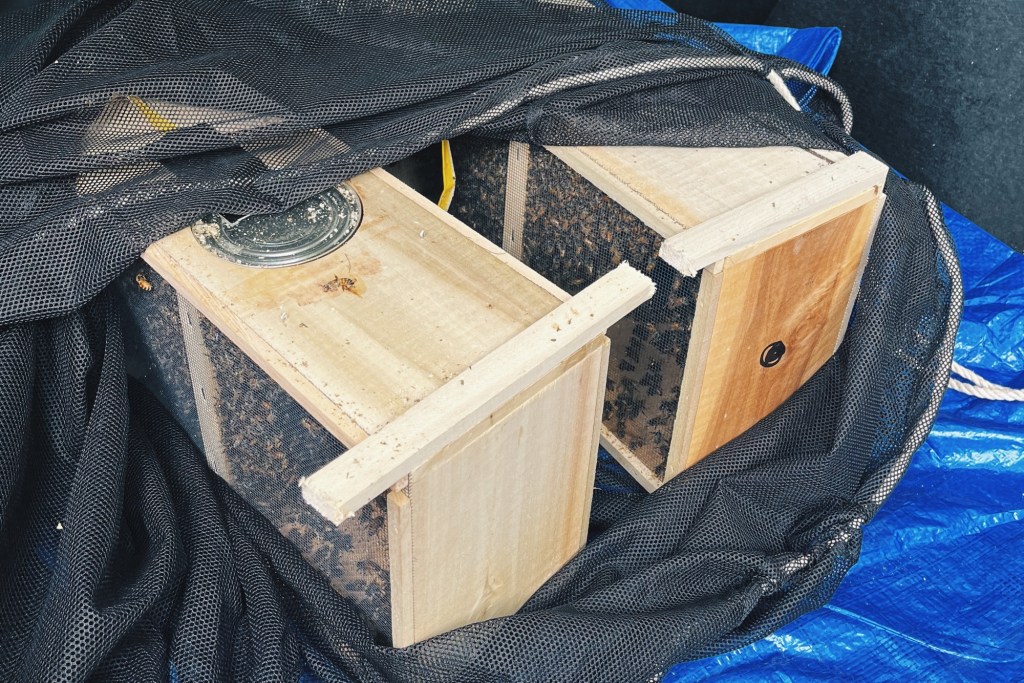
With each hive, Kellie carefully took the queen, still in her case, and put her into her new hive. The rest of the bees want nothing more than to follow her, so when Kellie tipped the box over the open hive and gave it a shake, they all tumbled out, a happy, vibrating clump.
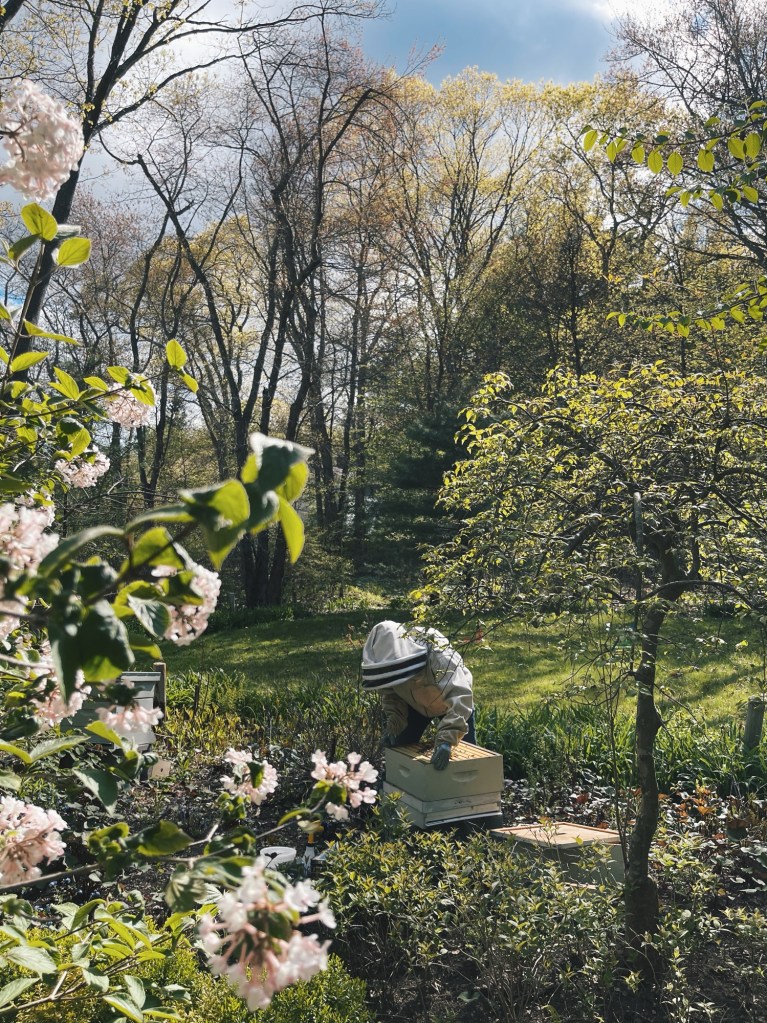
After a few days of “orienting flights” to get the lay of the land, the bees got to work. Kellie was here a couple days ago, and found that one of hives is already filling up their comb with pollen and nectar, requiring an additional box. The queens were both still stuck in their cases, so she pulled out the remaining sugar candy to release them… hopefully they’ll soon be mated and producing brood (baby bees) to strengthen the hives.
Note: what happens to drones once they mate a queen has been a source of much lively conversation around here, since reading about it in the bee book. I think Hugh has the page memorized.

It’s been so much more fun than I anticipated to have these creatures among us in the garden, doing their part. I love the quiet, meditative hum over in that corner of the yard, and find myself visiting them daily, rooting for them as they set up shop. I’m truly shocked at how much there is to learn about them – this whole little society, operating with incredible coordination. I keep thinking: how did I make it 42 years not knowing this? It’s a big world out there, and no shortage of amazing things to learn.
 The Key to the House